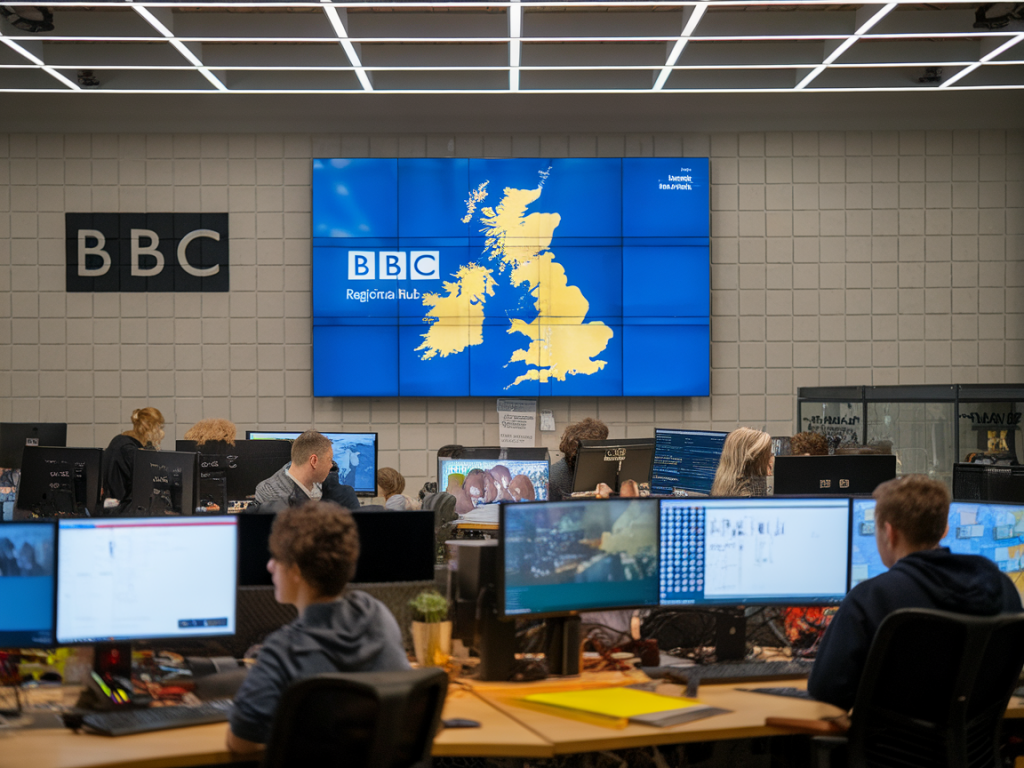
I’ve been following the BBC’s plans for regional hubs for months, talking to local reporters, newsroom managers and a few independent producers who depend on BBC commissions. The announcement promises efficiencies and a refreshed local footprint, but when I walk into a town hall coffee shop or a high street newsroom, the first questions people ask are blunt: what will this mean for local jobs, and will the stories they rely on still get told?
What exactly are these regional hubs?
The BBC describes regional hubs as consolidated production centres that will support radio, TV and online output across several neighbouring areas. In practice that means fewer standalone local broadcast centres and more shared facilities where technical teams, editors and production staff work across multiple local services. The goal, according to BBC executives, is to modernise production, reduce duplication and invest in journalism despite tighter budgets.
Will jobs be cut?
Short answer: yes, but the picture is complicated.
Across conversations I had, managers framed hubs as a way to move roles rather than simply eliminate them — creating new centralised positions while closing others. That reshuffling often comes with redundancies, particularly among production and technical staff whose work can be standardised and centralised. Local presenters and reporters sometimes escape immediate cuts, but their day-to-day will change.
What I heard repeatedly from unions and local journalists is that where cuts happen matters. Losing a single camera operator or studio engineer in a small city can have an outsized effect because those people often do double duty: they’re technicians, fixers, mentors and institutional memory. Replacing that with a centralised rota across a large hub region risks losing on-the-ground capacity.
How will the nature of local journalism change?
The move to hubs reshapes workflows. Editors in a hub will decide which stories get the resources of a mobile crew, which get an online-only treatment, and which are filed by freelancers. That can be efficient, but it also creates new gatekeepers. A reporter working in, say, a coastal town might now need to pitch not just to a local editor but to a regional desk competing with stories from other areas.
Positive changes are possible. Hubs could enable shared investigative resources, pooled data journalism teams, and better technical support for podcasts and social video. I met data journalists who welcomed centralised tools they previously couldn’t access. That matters: smaller newsrooms often lack the specialist skills to tackle complex stories about housing schemes, health services or regional economic policy.
Which stories are most at risk?
Local muscle tasks — council minute-by-minute coverage, low-key court hearings, local community events — are most vulnerable because they’re resource-intensive and generate modest audience figures. Those hyperlocal beats have historically been the first to suffer when budgets tighten.
Stories requiring sustained, place-based presence are also at risk. Long-term watchdog reporting, relationship-building with local sources and the slow accumulation of local knowledge don’t transfer easily to a hub model that prioritises content that can be packaged across several areas.
What might we gain?
What do local journalists fear most?
Loss of autonomy tops the list. Local journalists often pride themselves on rapid, independent decision-making — knowing their audience, their councillors and their civic institutions. When the editorial decision-making moves to a hub, reporters I spoke to fear slowdowns, misjudged priorities and a drift toward stories that “work” across a larger geography rather than the ones that matter most to a single town.
There’s also a morale factor. Newsrooms are communities. When colleagues are dispersed or replaced by rotating teams from a hub, the informal mentorship and day-to-day camaraderie that sustain local journalism can erode.
How will audiences notice the change?
Some changes will be subtle: a smoother-sounding regional bulletin, more polished social clips, or shared headline segments across neighbouring areas. Other signs will be more obvious — thinner coverage of local planning meetings, fewer on-the-ground interviews with community figures, and more regionalised stories that frame local issues in a broader context.
Audiences that rely on local radio for emergency information, traffic reports or community announcements may find the service less immediate. That matters in places where other local media have already disappeared.
Can hubs work without hollowing out local accountability?
Yes — but only with deliberate safeguards. From my reporting and discussions with editors, these are the measures that help:
A quick snapshot: examples of hub models elsewhere
| Model | Strength | Risk |
|---|---|---|
| Centralised production with local reporters | High production quality; specialist support | Loss of local newsroom culture; slower response times |
| Embedded mini-teams in key towns | Preserves local accountability; quicker local coverage | Higher cost; complex HR management |
| Networked freelancers supported by hub | Flexible scaling; local expertise | Inconsistent output; precarious work for freelancers |
What should communities do?
Communities that value local reporting need to be vocal. That means:
When I ask local people about the BBC’s hub plans, a recurring theme is that they don’t oppose modernisation; they want reassurance that the organisation understands the civic function of local journalism. Hubs can deliver a lot of technical and editorial benefits, but only if they’re designed with those civic needs in mind — not just as a balance-sheet exercise.