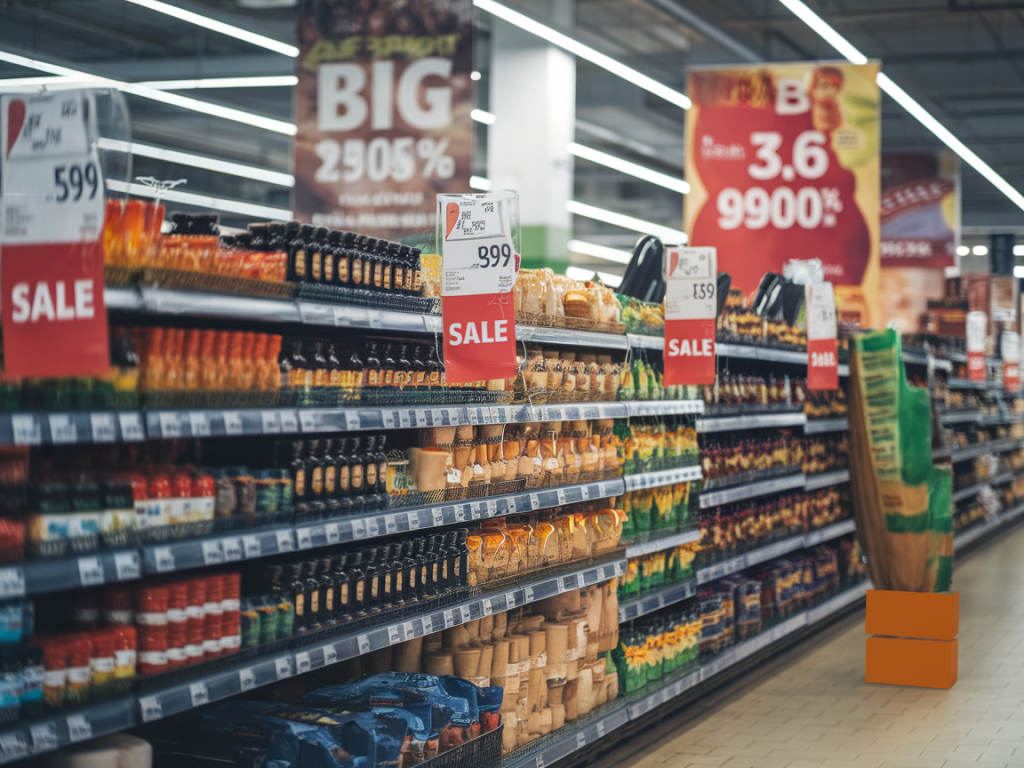
When I push my trolley through the weekly shop, the rows of yellow sale stickers and "3 for 2" offers create the impression that groceries are more affordable than the headlines suggest. Yet at home, when I check receipts and watch the household budget, something doesn't add up for many families: those shiny promotions can hide a harsher reality for low-income households.
Promotions look like bargains — but often aren't
I've seen shoppers flock to end-of-aisle displays that promise big savings. Supermarkets — from Tesco and Sainsbury's to Lidl and Aldi — rely on visible price promotions to grab attention and drive footfall. For many households, particularly those under financial strain, a buy-one-get-one-free or 25% off sticker is a psychological lifesaver.
Yet these offers can be misleading. Promotions frequently apply to a narrow set of products, or to larger pack sizes that the average low-income household can't afford upfront. You might save 30% per item on a multipack, but paying more cash at the counter today for a bulk option may be impossible for someone living paycheque to paycheque. In effect, promotions can create an illusion of choice that excludes the most vulnerable.
How retailers structure promotions
Retailers use a variety of techniques that, taken together, can skew the experience of inflation for different income groups:
These tactics are rational business strategies: they boost average basket value and help clear seasonal stock. But they have distributional effects — the benefits are unevenly shared.
Why low-income households don't get the same relief
From reporting and conversations with readers across the UK, several patterns emerge. First, liquidity matters. If you have limited cash on hand, buying in bulk simply isn't an option. A "save £6 when you buy two" deal on toilet rolls or cooking oil doesn't help a family that can only afford one pack.
Second, time and storage constraints matter. Urban renters may lack space to store bulk purchases. Single parents juggling shifts can't spend extra time seeking out promotions across multiple stores. And third, access to digital loyalty schemes varies — older adults and lower-income households are less likely to use retailer apps, so the best discounts pass them by.
Price statistics mask lived experience
Official measures like the Consumer Prices Index (CPI) aim to capture the overall change in prices, but they can't reflect the micro-level reality for every household. CPI weights are based on average expenditure patterns. When wealthier households trade up to more expensive goods during inflation, or when they capitalise on promotions requiring bulk buying or apps, the average statistics shift in ways that don't reflect the squeeze on those with the smallest budgets.
I find this particularly telling when comparing headline food inflation with what I hear at community food banks. A 2–3% change in headline food inflation can coexist with certain staples — bread, milk, cooking oil — rising by far more in the stores most accessible to poorer neighbourhoods. The result is a divergence between "official" inflation and households' perceived food price pain.
Examples that illustrate the gap
Here are simplified examples I've observed in stores across the UK:
| Item | Promotion | Practical issue for low-income households |
|---|---|---|
| Cooking oil | 2 for £6 (500ml bottles) | Requires £6 upfront; single 500ml bottle priced at £3.50 — unaffordable for some |
| Shampoo | Buy one, get one free (750ml) | Larger pack, not suitable for shared or temporary housing; single 250ml options have higher unit price |
| Frozen peas | £1 each with loyalty card; non-card price £1.50 | No smartphone/knowledge barrier means losing out on lower price |
The psychological effect of "sales" messaging
Retailers are excellent at framing. A "was £2.50, now £1.50" badge feels like a win. I often find shoppers interpret this as a signal that overall prices are under control. But promotions are also used to hide price rises. When a core product is raised from £1.40 to £1.60, a store might put another item on special at £1.60 too — making the shelf look consistent even as the everyday essentials have increased.
This promotional noise can dull the signal of steady inflation. If a shopper sees lots of sale stickers, they may assume prices are not a problem — while in reality their usual basket costs more and their options are narrower.
Policy and retail responses that could help
There are practical interventions that would make promotional strategies fairer without stifling competition. A few ideas I've discussed with economists and community groups:
What households can do now
As a practical journalist, I don't want to simply point fingers — I want to share things readers can try. From my reporting and own shopping experiments:
Promotions can be a lifeline for some shoppers, but for others they create an illusion of affordability while the underlying cost of living keeps rising. Until retailers, regulators and policymakers acknowledge how promotional strategies interact with household liquidity and access, headline price drops will continue to mask very real inflation for Britain's most vulnerable families.