I remember the first time I saw Apple’s Vision Pro demo: the room felt both familiar and futuristic. As someone who writes about tech and watches how innovation reshapes creative work, I immediately started thinking about a very practical question for UK freelancers — photographers, filmmakers, stylists, set designers and content creators who often juggle tight budgets and tight schedules: can this headset really replace a physical studio and virtual sets for professional shoots?
What the Vision Pro actually offers
Apple’s Vision Pro is billed as spatial computing: a headset that blends your view of the real world with high‑resolution virtual displays and 3D objects. For creative shoots that traditionally depend on big studios and elaborate set builds, the promise is seductive. In theory, you could don a headset, place a photorealistic backdrop, adjust lighting filters, and direct talent through a virtual environment without leaving your flat or a co‑working space.
But there’s a gap between a polished demo and real production realities. The device shines for design reviews, previsualisation, remote collaboration and some forms of location scouting. It’s less clear whether it can currently deliver the nuanced lighting, camera control, and tactile collaboration that high‑end studio shoots demand.
Where Vision Pro could genuinely replace parts of a studio workflow
- Previsualisation and moodboarding: I can see freelancers using the headset to mock up virtual sets before a physical shoot. Showing a client a lifelike scene you build in VR is faster and more persuasive than a PDF moodboard.
- Cost‑effective small shoots: For product photography, social content, or quick portraiture, a virtual background combined with good on‑camera lighting might be enough — especially for brands that want a clean, polished look without location fees.
- Remote collaboration: The Vision Pro’s spatial audio and multiuser capabilities could let remote creative directors join shoots virtually, offering real‑time feedback while the freelancer operates on the ground.
- Virtual props and set extensions: When physical props are expensive or hard to source, virtual alternatives can help convey the concept. This is particularly useful in early stages of campaigns or for animated elements layered into live footage.
Where it falls short right now
High production work still demands things a headset can’t fully replicate yet.
- Camera fidelity and physical lenses: Studio photographers rely on specific cameras, lenses, depth of field and motion control rigs. While Vision Pro supports spatial visuals, it won’t replace the optical quality and creative control of professional cameras.
- Lighting nuance: Real light — its falloff, reflections on fabric, catchlights in eyes — behaves differently when interacting with real subjects. Virtual lighting can mimic many effects, but matching that tactile reality requires advanced capture systems and often, green screens or mixed reality capture stages.
- Colour accuracy and post‑production: For commercial and print work, exact colour reproducibility is critical. Current AR displays and pipelines aren’t yet the standard for accurate proofs without additional calibration and testing.
- Movement and physical interaction: If the talent needs to touch, sit on or interact with a prop, virtual sets struggle. Haptics are still nascent — creating believable physical interactions means either building physical props or using clever stitching in post.
Practical hybrid workflows that make sense
From my conversations with photographers and creative directors across the UK, the most realistic near‑term outcome is hybrid workflows that combine virtual and physical elements. Here are practical approaches freelancers could adopt now:
- Previsualise, then shoot: Use Vision Pro to create a detailed mockup and client sign‑off. Once approved, replicate the key elements in a small, cost‑effective studio or pop‑up space. This reduces wasted time and allows clients to visualise the end product.
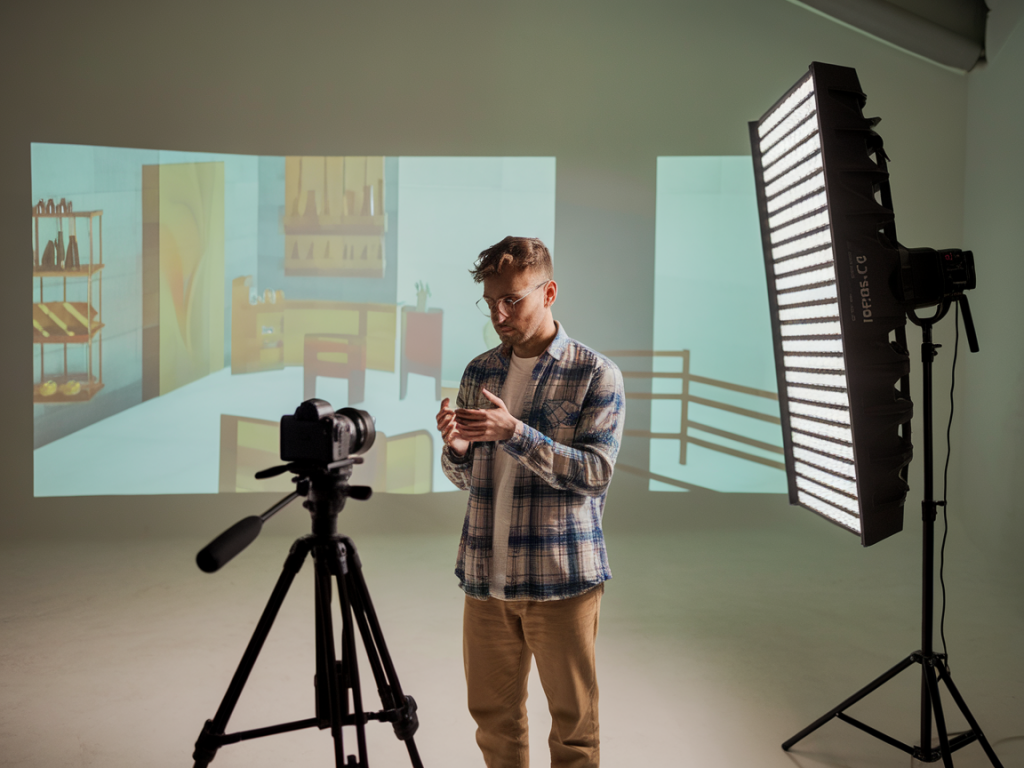
- Virtual backgrounds plus practical lighting: Capture talent in front of simple, neutral backdrops with carefully controlled lighting. Add the virtual background in camera or composite in post. This works well for e‑commerce and headshots.
- Remote directing: For regional shoots, have the director join via Vision Pro or similar spatial tools to guide a local shooter. This cuts travel costs and keeps creative oversight tight.
- Mixed reality capture services: If a project requires full immersion, partner with specialised studios that offer mixed reality capture (XR stages, volumetric capture). Freelancers can hire the stage for a day rather than owning the infrastructure.
Costs, accessibility and training
Price matters. Vision Pro is a premium device and, even if a freelancer can buy one, the ecosystem of apps, plugins and capture hardware needed to integrate it into professional workflows is another expense. In the UK market — where margins are often slim for independent creatives — the smarter move may be renting hardware or using local studios that provide the tech.
There’s also a skills gap. Learning spatial design, understanding mixed reality lighting, and building workflows between headset previews and camera rigs requires training. I’d advise freelancers to invest in workshops, online courses or peer learning groups so they can sell the value of a hybrid virtual‑studio process to clients.
Client expectations and storytelling
Clients increasingly care about speed and cost, but they also want authenticity. For many brands, the value of a physical set — the textures, uncontrolled moments and serendipity — still matter. The opportunity for freelancers is to offer storytelling trade‑offs: quicker turnaround and imaginative visuals via virtual sets for some briefs, and traditional tactile shoots where authenticity or physicality is non‑negotiable.
Framing this to clients will be part technical and part narrative: explain how a virtual set reduces location risk, speeds approvals, and can create impossible environments, while also being transparent about limitations such as interaction and colour proofing where necessary.
Legal and rights considerations
Another angle freelancers can’t ignore is IP and licensing. Virtual assets — whether prebuilt backgrounds or bespoke 3D models — come with their own license terms. Make sure contracts clearly state who owns which assets, whether the client can reuse virtual sets, and who is responsible for any third‑party royalties. In the UK’s commercial environment, clarity up front avoids disputes later.
Who benefits most in the UK?
From where I sit, certain segments will find Vision Pro and virtual sets especially useful:
- Social media creators and micro‑brands: Fast content cycles and lower production expectations make them ideal early adopters.
- Agencies and freelancers offering concept testing: Rapid visualisation can shorten pitching cycles and client approvals.
- Regional shoots with remote directors: UK freelancers outside London can offer premium creative direction without sending teams across the country.
- Education and training providers: Film and photography courses can use spatial tools to teach composition and lighting before students enter a physical studio.
I’m excited by what Vision Pro and similar devices can offer, but I’m equally pragmatic. For most UK creative freelancers, the future looks hybrid: virtual tools will reshape planning, client sign‑off and some types of shoots, while physical studios and experienced hands will remain essential for high‑end work that requires tactile realism. The smart freelancers will experiment, invest selectively in skills and partnerships, and use the technology to expand what they can offer rather than presume it’s a full replacement for the craft of studio production.