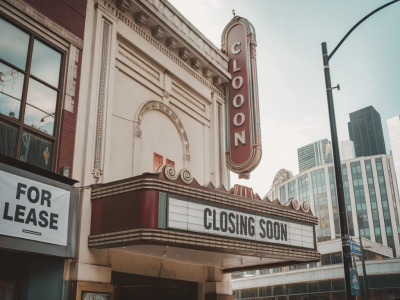
I’ve been following the policy debates around targeted business rates relief closely because, frankly, high streets matter to me — and they matter to the communities I cover. When ministers and council leaders talk about “restoring services” through relief for small retailers, that sounds promising. But what exactly will targeted business rates relief allow councils to restore? And what are the realistic limits local authorities face when trying to translate relief into visible improvements on our high streets? Below I walk through the practical pathways from relief to services, the trade-offs councils confront, and the actions local retailers and residents can reasonably expect.
How targeted business rates relief works in practice
Business rates are a form of property tax paid by occupiers of non-domestic property. When the government offers targeted relief — whether to specific sectors (like independent retailers) or to defined areas (such as retail high streets) — it reduces the immediate tax bill for those businesses. Councils receive guidance and sometimes funding from central government to implement these schemes.
But the path from a smaller rates bill to “restored services” isn’t automatic. Relief primarily benefits businesses directly. Councils can, however, use two levers that affect high-street services:
- Direct administration of local relief schemes: Councils run the application and distribution process, meaning they can coordinate support in ways that dovetail with local priorities.
- Reallocation of local budgets: If relief prevents business closures and preserves rateable income over time, councils may face less demand for support or lose fewer shops — indirectly reducing pressure on related local services.
So when national messaging suggests relief will “restore council services,” it often means councils will be better able to prioritise spending or avoid further cuts that would otherwise have been necessary as local economies weaken.
Which council services are most likely to be restored — and quickly?
In the short term, the most plausible, tangible restorations are services that are low-cost to scale up and closely tied to high-street maintenance or trading conditions. From what I’ve observed across multiple local authorities, these include:
- Street cleansing and litter collection: Councils can more quickly increase street-sweeper rounds and litter-picking contracts when they aren’t stretched to the brink. Cleaner streets have an immediate impact on shopper perceptions.
- Town centre maintenance and repairs: Repairs to street furniture, signage, and small-scale pothole work can be reinstated without large capital outlays.
- Enhanced enforcement against fly-tipping and anti-social behaviour: Funding for environmental enforcement officers and CCTV monitoring is relatively modular, so modest budget uplifts can restore presence.
- Business support and marketing: Councils often run business improvement campaigns (events, shop-local campaigns, window-dressing grants). These discretionary budgets are among the first to be cut in austerity — and among the first to return.
- Market and events programming: Pop-up markets, street festivals, and support for late-night economy initiatives can come back with small amounts of targeted funding.
All of these have a visible impact for independent retailers — think of a cleaned-up high street ahead of a Saturday, or a council-led "shop local" promotion timed with seasonal trading. Those are the quickest wins.
Services that are less likely to be restored quickly
There are bigger, costlier, or more structural services that targeted business rates relief won’t immediately restore:
- Large capital projects: Schemes like major town centre regeneration (rebuilding shopping arcades, major pedestrianisation works, large-scale cultural centres) require multi-year capital budgets and often leverage multiple funding sources beyond business rates.
- Significant public transport enhancements: While councils can support local transport initiatives, bus networks and rail services depend heavily on separate funding pots and private operators.
- Long-term social services and adult social care: These represent the largest items in many council budgets. Even if councils see marginal relief from business rates pressures, restoring social care funding to previous levels is a systemic challenge that targeted retail relief cannot fix on its own.
- Large-scale empty-property regeneration: Turning derelict buildings into homes or commercial units often requires major grants, complex planning, and private capital.
This matters because some councillors may promise “restored council services” in broad terms. As a reader, look for specificity: whether the restoration is about cleansing, business support, or something more ambitious.
How councils can use the relief strategically
From conversations with council officers and local business groups, I’ve seen a few pragmatic approaches that make the most of targeted relief:
- Ring-fencing relief-linked savings for high-street programmes: If relief reduces local relief-payment burdens or helps maintain rateable income, councils can deliberately ring-fence a portion of the budget savings for town-centre improvement schemes.
- Combining relief with business support offers: Councils can tie relief to advisory packages — for example, offering free business mentoring, energy-efficiency audits, or grant-matching for shopfront improvements.
- Leveraging match funding: Small infusions of funding can unlock larger pots from the private sector or national regeneration funds, especially where there’s a clear plan (e.g., a shopfront improvement scheme led by a Business Improvement District).
- Using relief as a platform for co-ordinated action: Councils can incentivise collaborative initiatives between retailers — joint marketing, shared click-and-collect facilities, or coordinated opening hours to revitalise footfall.
One practical example I’ve seen: a council offered reduced rates to independent bookshops conditional on participation in a town-wide events calendar and matching local grants for shopfront refurbishment. The result was cleaner streets, more events, and a small but measurable uplift in footfall during weekends.
What retailers should do now
If you run a small high-street shop, don’t assume relief will magically cover everything. Here are realistic steps you can take to maximise the benefits:
- Apply promptly and check eligibility: Relief schemes are often time-limited and require documentation. Early application helps cash flow right away.
- Engage with your council and BID: Ask how relief links to local business support. Join or form a Business Improvement District (BID) if possible — BIDs can amplify the impact of small grants and co-ordinate marketing.
- Propose targeted projects: Suggest practical, low-cost improvements (shared click-and-collect points, coordinated window displays, joint events) that councils could support using any freed-up funds.
- Keep records: Track how relief helps your business so you (and councillors) can make the case for continued or extended support.
What residents and shoppers can expect to see
In towns where councils apply relief strategically, you’ll notice a few concrete changes sooner rather than later: streets that are cleaner, more visible enforcement against fly-tipping, schedules of town-centre events and markets back in action, and small shopfront upgrades. You shouldn’t expect immediate large-scale redevelopment or dramatic changes to transport services in the short term.
| Likely short-term restorations | Unlikely short-term restorations |
|---|---|
| Street cleansing, litter collection, minor repairs | Major regeneration projects |
| Business support campaigns, market programming | Significant expansion of social care budgets |
| Environmental enforcement and CCTV | Large-scale transport infrastructure |
Ultimately, targeted business rates relief is a useful lever, but it’s not a silver bullet. Its value depends on local leadership, council priorities, and collaboration between businesses, BIDs and residents. I’ll keep watching how councils deploy these schemes across the UK — and reporting back with examples of where relief is making a visible difference on the high street.