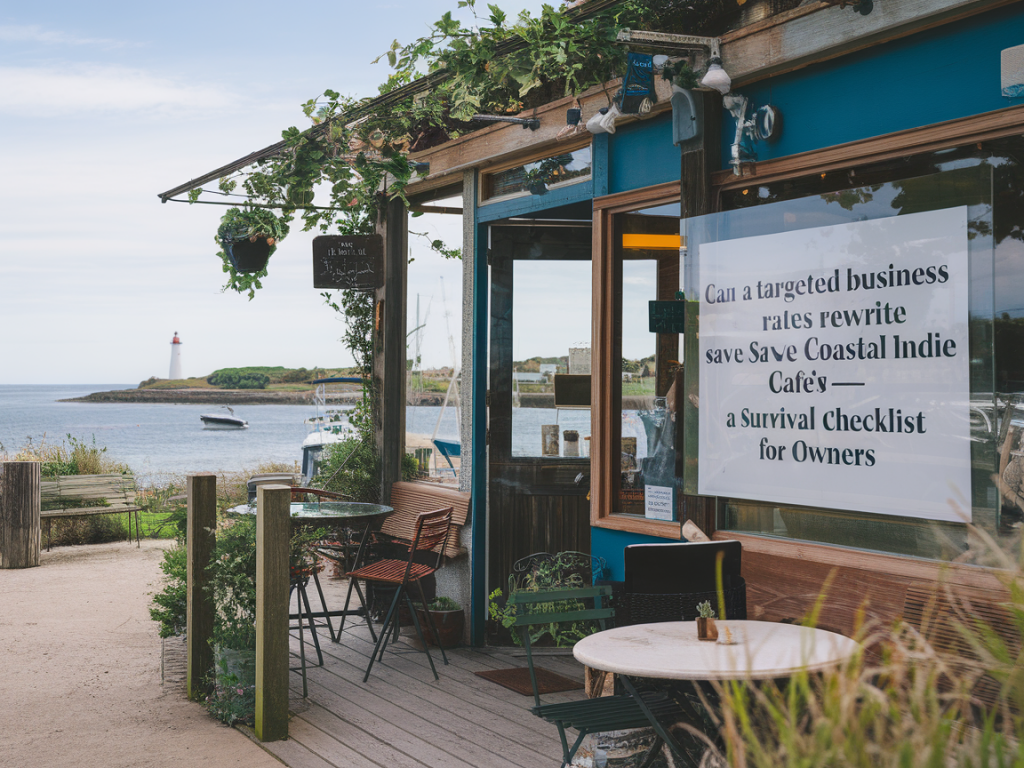
I spend a lot of my working life thinking about how policy and markets collide with daily life. On a recent trip to the Yorkshire coast, I watched two neighbouring cafés — one a bright, airy Costa and the other a tiny independent selling seasonal crab sandwiches and flat whites — deal with the same high street, yet with wildly different outcomes. The chain thrived; the indie owner was exhausted and worried about rates. That scene keeps coming back when people ask if a targeted rewrite of business rates could actually save coastal independent cafés. My answer is cautiously hopeful: yes, but only if reform is sharply targeted and paired with a practical survival checklist for owners.
Why coastal indie cafés are uniquely vulnerable
When we talk about business rates, the conversation often centres on urban retail or large hospitality chains. But independent cafés on the coast face a specific mix of challenges:
Seasonal revenue swings: Peak summer weeks can cover months of losses, making fixed costs like rates particularly painful.Smaller footprints and thin margins: A single rate bill can represent a far higher proportion of turnover than for a multi-site chain.Local property values skewing valuations: Valuations used for rates can lag local realities — a tourist-seasonal location might still be assessed at a level that makes little sense for year-round trading.Access to relief and grants: Smaller indies may lack the time or expertise to claim Small Business Rate Relief, charitable reliefs, or council discretionary funds.Those facts explain why a one-size-fits-all approach to rates reform rarely helps the smallest coastal businesses that provide the character and jobs which draw visitors in the first place.
What would a targeted business rates rewrite look like?
A targeted rewrite would not mean simply lowering bills across the board. It should redirect support towards businesses whose economic contribution to local communities is high but whose balance sheets are fragile. Here are core elements I believe matter:
Seasonal multipliers: Allow rates to be adjusted for businesses with demonstrable seasonal turnover patterns, so assessments reflect annualised income rather than peak-season snapshots.Lower thresholds for hospitality relief in coastal wards: Extend or enhance Small Business Rate Relief specifically for cafés in coastal wards where visitor-led trade is the norm.Faster revaluation mechanisms: Speed up the appeals and revaluation process for properties whose market value has shifted dramatically due to tourism trends or local regeneration.Discretionary local relief pots: Give councils ring-fenced funding to support micro-businesses that can show a clear community benefit (employment, local supply chains, tourism attraction).Targeted transition support: For businesses facing immediate cliff-edges, short-term grants or tapered relief during implementation of a new system.Put simply: the system should reward year-round economic contribution and community value, not just raw property valuations.
Questions owners ask — and practical answers
When I speak with café owners, the questions repeat. Below I answer them in straightforward terms.
Will a rewrite cut my bill automatically? Not automatically. Targeted reform could open the door to lower assessments or reliefs, but most owners will need to apply for reliefs, lodge appeals if valuations are unfair, or work with councils to access discretionary funds.How do I prove seasonality? Keep clear, dated financial records: monthly takings, supplier invoices, bank statements showing seasonal spikes. Councils and the Valuation Office Agency respond to robust data showing annualised turnover patterns.Can I challenge my property's rateable value? Yes. Use the VOA check, gather comparable evidence (similar premises in low-season), and consider a professional rate adviser if the sums are large. Many local business groups or chambers of commerce offer free advice.What emergency supports exist now? Look for Small Business Rate Relief (SBRR), Rural Rate Relief in qualifying parishes, and council discretionary relief. After Covid, some councils maintain emergency funds; it’s worth asking your local authority for a case review.Should I lobby my MP or council? Absolutely. Local campaigns that demonstrate tourism impact and community value can persuade councils to use discretionary powers. MPs can escalate to Treasury and the VOA for systemic changes.A practical survival checklist for coastal café owners
These are the immediate, actionable steps I recommend — a mix of administrative, financial and advocacy moves.
Document seasonality: Build a tidy file of 12 months’ bank statements, POS reports, supplier invoices and payroll to show true annual turnover.Check entitlement now: Confirm whether you qualify for SBRR, Rural Relief, Charitable Relief (if you host community events) or council discretionary support.File a VOA appeal if warranted: Use comparables and evidence of reduced valuations locally. Timeframes matter — challenge sooner rather than later.Talk to your council early: Book a rates surgery with your local authority. They often have small business support officers who can advise on grants and rate relief.Join or form a local business group: Collective lobbying is more effective. Councils respond to coordinated data showing area-wide issues.Review lease and rent terms: Negotiate break clauses or rent reductions during low season; landlords sometimes prefer reduced rent to empty premises.Explore seasonal staffing models: Use flexible contracts or partner with staffing agencies to align labour costs with demand.Diversify revenue: Think retail (branded coffee beans, local produce), subscriptions (coffee club), or off-season events (workshops, supper clubs).Use technology to tighten margins: Efficient POS systems (Square, Lightspeed), stock control and online ordering reduce waste and boost repeat custom.Keep customers informed: Use social media and local tourism partnerships to attract off-peak visitors with events and promotions.What policymakers should know
If ministers and local leaders want coastal cafés to survive — and to keep places lively and economically resilient — they must recognise that business rates are part of a wider ecosystem. Reform without support for skills, marketing of off-season tourism, and flexible labour policies will fall short. A meaningful rewrite should prioritise:
data-driven assessments that account for seasonality;local discretion with central funding to ensure fairness across councils;fast-track appeals and support hubs for micro-businesses.When I left that Yorkshire town I bought a jar of the café’s house jam. It struck me that these places are more than businesses: they’re community nodes and job creators. Business rates are a blunt instrument; with targeted tuning and the right survival playbook in the hands of owners, they can be made far less destructive.