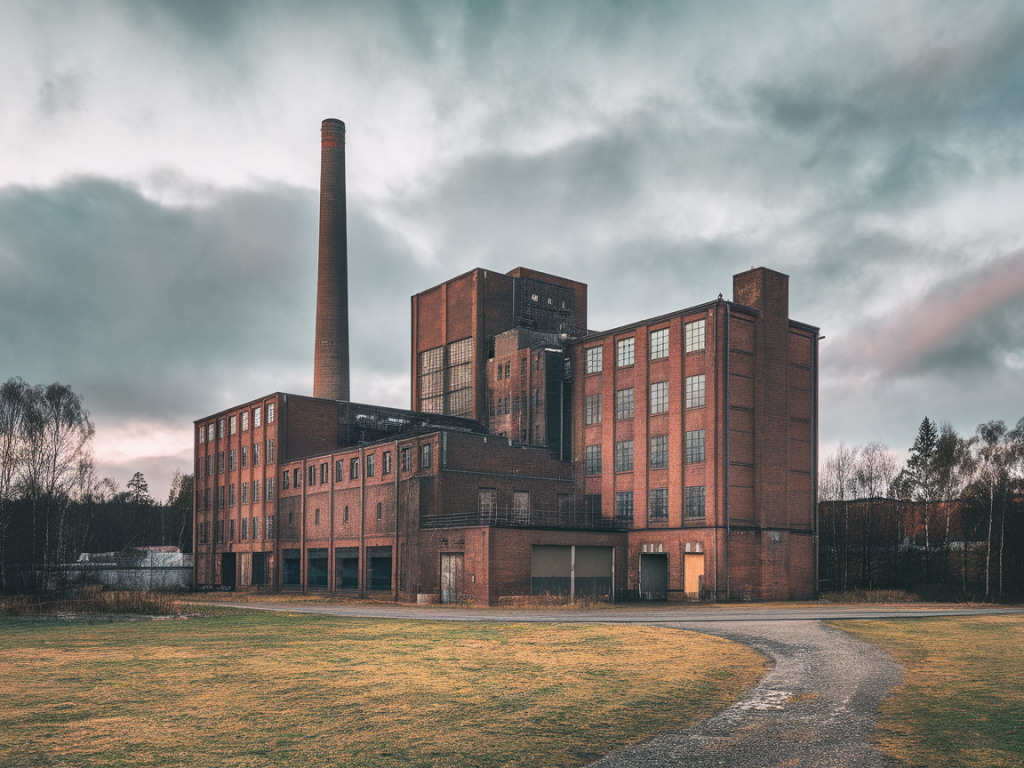
I watched the announcement roll across my feed and felt that familiar, sinking mix of anger and resignation. A major factory in Scotland — one that employed thousands directly and supported supply chains across the UK — is closing. The immediate human cost is obvious: lost wages, disrupted families, and communities facing a future they didn't choose. But the wider consequences, the ones that should make policymakers sit up and pay attention from Westminster to Cardiff and Belfast, are just as urgent. This is not only a Scottish problem. It is a national alarm bell about industrial resilience, regional inequality and the fragility of the UK’s economic geography.
Why this closure matters beyond the town
When a large plant shutters its doors, the headlines focus on redundancies. That matters, but it's only the first layer. I keep asking: what happens next? Who picks up the work the factory did for customers across sectors? How long will it take for affected workers to find comparable employment? Which local services will feel the strain as council tax receipts and spending power fall?
The reality is that the ripple effects reach far beyond the factory gates. The company may have been a single legal entity, but it formed part of a network — suppliers, transport firms, cleaning contracts, hospitality businesses that served shifts. Those links are fragile. Once they break, the cost of rebuilding them can be higher than the short-term benefit of shifting production elsewhere.
Regional jobs are national interests
I am often asked whether regional factory losses really matter to the whole country. The short answer: yes. A thriving regional economy reduces pressure on housing and transport in London and the South East, lowers welfare spending and sustains local public services. When a major employer closes, it increases demand on national safety nets and reduces tax receipts that fund the NHS, schools and infrastructure everyone relies on.
Consider this: a factory employing 1,200 people might appear small on national payroll statistics. But in a small town, those 1,200 jobs can account for a significant share of employment age work. Their disappearance multiplies into higher unemployment benefits, increased demand for retraining programmes, and social costs that local councils must manage. If policymakers treat these as isolated problems, the aggregate national cost will be larger and more entrenched.
Supply chains and national security
Many modern factories are embedded in critical supply chains — automotive parts, pharmaceuticals, semiconductors, clean energy components. I have spoken with engineers and procurement managers who now worry that the UK is losing key nodes of capability. When a factory with unique tooling or expertise closes, that knowledge often disperses or vanishes. Recreating it is not like flipping a switch; it can take years and significant investment.
If international tensions or trade disruptions occur, countries with robust, geographically diverse industrial bases can pivot more easily. The UK’s current pattern — concentration in a few regional clusters and hollowing out elsewhere — makes that pivot harder. Policymakers should see closures not just as local economic failures but as erosion of national resilience.
What workers and communities ask — and deserve
- Why couldn't the government step in? People often ask whether ministers could have prevented the closure. Intervention is not always simple — state aide rules, company finances and global market decisions constrain options. But there are effective steps governments can take earlier: targeted support for retooling, conditional loans tied to job retention, and local investment zones with clear incentives.
- Will retraining really work? Retraining is essential, but it is too often offered as a one-size-fits-all fix. Workers need training that leads to real vacancies nearby, with living wages and career progression. Short courses in remote digital skills help some, but not everyone can move into tech jobs overnight. We need sector-specific retraining combined with employer co-investment and clear local job pipelines.
- Is the market to blame? Global competition and automation are real forces. But market outcomes reflect policy choices too — tax structures, energy costs, planning processes and support for innovation. Leaving everything to market forces without strategic industrial policy ignores that the playing field can be shaped.
Practical policy steps that would make a difference
I’ve seen what works in other places, and I think the UK needs to combine national strategy with local muscle. These are not silver bullets, but they are practical:
- Rapid response teams: cross-departmental units that intervene immediately after announcements to map local supply chains, identify alternative buyers and mobilise short-term support to keep parts of the business running while solutions are found.
- Targeted financial instruments: conditional loans or equity investments aimed at preserving critical capability, with clawbacks if companies abandon commitments. This isn’t industrial patronage — it’s smart insurance against strategic loss.
- Local industrial partnerships: councils, local colleges, employers and trade unions should be empowered and funded to design retraining that matches real employer demand.
- Supply chain visibility: incentives for businesses to publish and map their UK supply chains, so government and industry can spot single points of failure before they collapse.
- Energy and infrastructure certainty: high and volatile energy costs push manufacturers offshore. Long-term, predictable energy pricing and investment in transport links matter as much as direct subsidies.
Lessons from other closures and recoveries
Communities recover when action is swift and sustained. I’ve reported from places devastated by plant closures where local leaders partnered with universities and investors to create new clusters — sometimes in related sectors, sometimes entirely new specialisms. Those successes were not accidental: they came from clear local strategies, patient capital and a willingness to back long-term projects like digital skills hubs or advanced manufacturing centres.
Conversely, where policymakers delayed or offered only short-term cash, towns lingered in decline. That’s a lesson worth repeating now: rapid, coordinated national and local responses are not optional niceties. They determine whether a closure becomes a slow-motion economic collapse or a painful but manageable pivot.
What I will be watching next
I will be tracking several indicators that tell us whether this closure becomes a national wake-up call or another local tragedy:
- Speed of government response and whether interventions focus on preserving capability rather than just mitigating job losses.
- Coordination between local colleges and employers on retraining pathways tied to actual vacancies.
- Private sector moves: do suppliers relocate abroad, or does a buyer emerge to salvage parts of the operation?
- Investment flows into the area over the medium term — is there patient capital targeting new industries?
| Immediate impact | Medium-term risk | Policy priority |
|---|---|---|
| Job losses and lost incomes locally | Supply-chain fragmentation | Rapid response & short-term support |
| Reduced local tax receipts | Skills mismatch | Targeted retraining & employer partnerships |
| Community social strain | Loss of industrial capability | Strategic investment & capability preservation |
When a major factory in Scotland — or anywhere in the UK — closes, the immediate grief is local but the stakes are national. I want policymakers to treat these moments as system stress tests: if we fail to shore up the weakest links now, the next shock will hit harder, with fewer options left to respond. The clock is ticking, and the choices made in the weeks and months after a closure will shape communities and the country for years to come.